
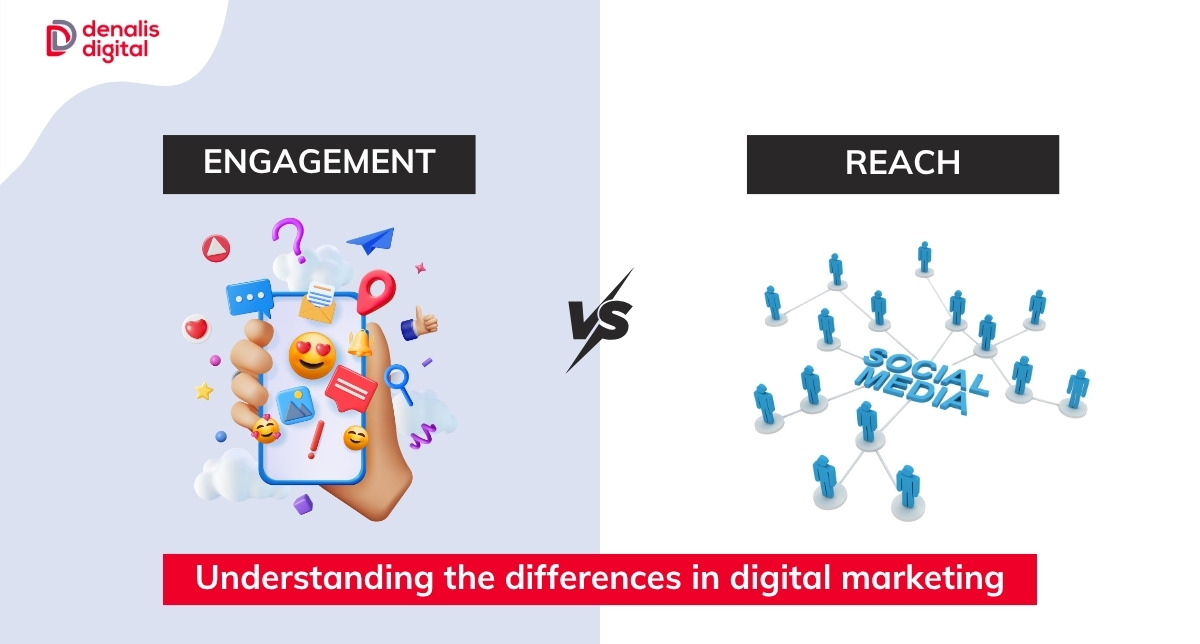
Engagement Vs Reach: Digital marketing thrives on data. Two of the most common metrics marketers track are reach and engagement. While they often appear side by side in reports, they measure very different things. The confusion comes when businesses treat them as the same — but understanding the difference is key to creating campaigns that actually deliver results.
What is Reach?
Reach refers to the number of unique people/accounts who see your content. If 1,000 people/accounts come across your post, then your reach is 1,000. This metric answers the question: How many people did my message get in front of? Reach can be broken down further into:
- Organic reach – how many people saw your content naturally, without paid promotion.
- Paid reach – how many people saw it through ads or boosted posts.
- Viral reach – how many people saw it because others shared it.
The value of reach lies in visibility. It ensures that your brand, product, or message has the chance to be noticed.
What is Engagement?
Engagement is about how people interact with your content once they see it. It measures the actions taken — likes, comments, shares, saves, clicks, replies, or even time spent watching a video.
Engagement answers the question: Did my content spark a response? It reflects how much your audience connects with what you posted, whether that’s through humor, relevance, inspiration, or curiosity.
Unlike reach, engagement is less about exposure and more about relationship building. It tells you whether your content is meaningful enough to move people to act.
The Key Difference
To put it simply:
Reach = visibility (how many people saw your content).
Engagement = interaction (what people did after seeing it).
The two work together but serve different purposes. Reach shows the breadth of your audience, while engagement shows the depth of their connection to your content.
For example, a post may reach 10,000 people but only receive 100 likes and 5 comments. Another post might reach just 2,000 people but get 300 likes and 50 comments. Both are valuable — but they’re measuring completely different outcomes.
Why Marketers Get Confused
Many digital marketers blur the line between the two because both metrics appear in the same dashboards and reports. A post with high reach may seem “successful,” but without engagement, it could mean the message didn’t resonate. On the other hand, a post with high engagement but very low reach might indicate the content works well, but not enough people are seeing it.
This confusion often leads to strategies that prioritize one metric without considering the other. The result? Campaigns that either look good on paper or feel good in the comments — but don’t achieve balanced growth.
Why Knowing the Difference Matters
When you clearly understand the difference, you can:
Set realistic goals – Decide whether your campaign is about brand awareness (reach) or building community and action (engagement).
Measure success correctly – A large audience doesn’t mean much without response, and strong engagement means little if your audience is too small.
Optimize strategies – Knowing which metric to prioritize helps guide creative choices, ad spending, and platform selection.
Conclusion
Reach and engagement are not interchangeable. Reach measures how many people see your content, while engagement measures how they respond to it. Both are important, but for different reasons.
The clearer you are about these differences, the better you can design campaigns that make sense — campaigns that not only reach people but also move them to take an action.
At Denalis Digital, we help brands decode these metrics and turn them into strategies that work. Let’s talk about making your next campaign both seen and felt. Email us at denalisafrica@gmail.com